Vous avez besoin d'un fabricant audio OEM/ODM haut de gamme doté de huit capacités techniques : ingénierie et conception audio avancées, tests et assurance qualité complets, excellence et évolutivité de la fabrication, approvisionnement en matériaux et composants, intégration de logiciels et de micrologiciels, personnalisation et flexibilité, certifications et conformité, ainsi qu'innovation et R&D. Un partenaire solide dans ces huit domaines protège les performances du produit, raccourcit les délais de mise sur le marché et renforce votre position concurrentielle. Une faiblesse dans une seule de ces capacités peut entraîner des rappels, des retards ou des produits qui ne répondent pas aux attentes haut de gamme.Tonewinner illustre la manière dont un fabricant combine ces capacités pour fournir des solutions audio OEM/ODM personnalisées à grande échelle.
L'ingénierie et la qualité constituent le fondement de tout produit audio haut de gamme. Vous avez besoin d'un partenaire qui conçoit avec précision, teste avec rigueur et intègre les logiciels de manière transparente. Ces trois capacités déterminent si votre produit fonctionnera de manière fiable dans le monde réel.
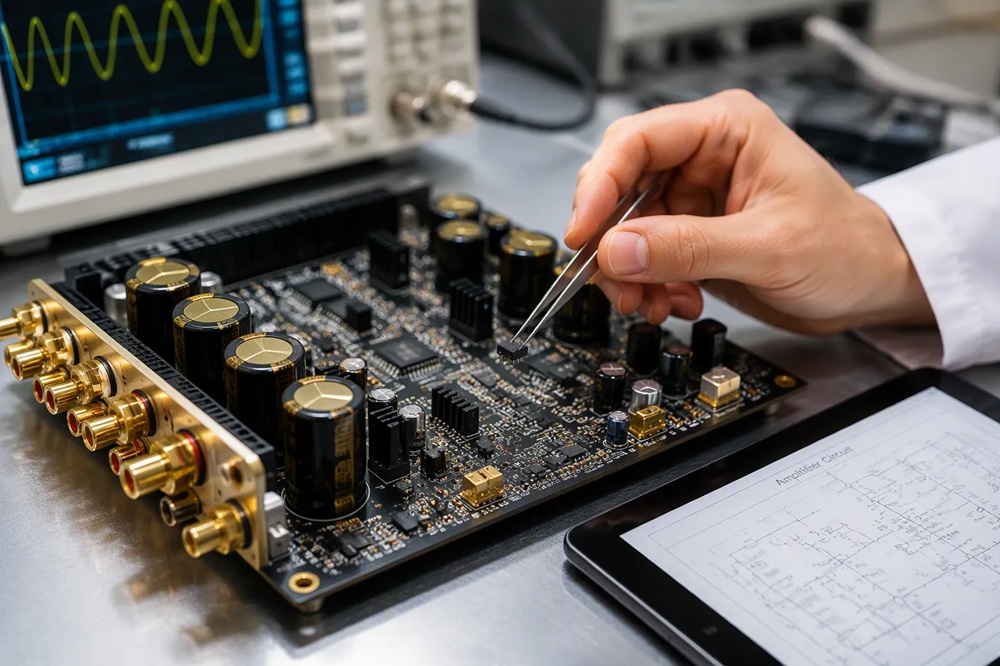
Un son exceptionnel commence par une excellente conception. Les fabricants OEM/ODM haut de gamme investissent massivement dans l'ingénierie acoustique, le développement de transducteurs et la science des matériaux. Vous devriez rechercher des partenaires qui repoussent les limites de ce que les petits facteurs de forme peuvent accomplir.
La conception moderne des haut-parleurs a considérablement progressé ces dernières années. Les principaux fabricants mettent désormais en œuvre plusieurs innovations clés :
Ces avancées distinguent les produits haut de gamme des produits de base. Un partenaire doté d'une expertise acoustique approfondie peut régler les haut-parleurs pour qu'ils correspondent à la signature sonore cible de votre marque. Ils peuvent également optimiser les conceptions mécaniques pour le confort lors d'un port prolongé.
Tonewinner démontre ce niveau de profondeur en ingénierie. L'entreprise combine une technologie de haut-parleurs avancée avec une fabrication de précision pour fournir des produits audio qui répondent à des normes de performance exigeantes.
L'excellence de la conception ne signifie rien sans des tests rigoureux. Vous avez besoin d'un fabricant qui valide chaque unité par rapport à des critères de qualité stricts. Les partenaires OEM/ODM haut de gamme intègrent la qualité dans le processus plutôt que de l'inspecter à la fin.
Interrogez vos partenaires potentiels sur leurs protocoles de test. Le tableau suivant présente les indicateurs de performance qui distinguent les fabricants haut de gamme des fabricants standard :
|
Indicateur de performance / Indicateur de qualité |
Norme OEM/ODM haut de gamme |
|
Test de continuité des conducteurs |
100 % des unités testées |
|
Test de résistance d'isolation |
Échantillonnage par lot |
|
Test Hi-Pot (rigidité diélectrique) |
Appliqué à toutes les unités concernées |
|
Test de force de traction aux terminaisons des connecteurs |
Effectué sur les câbles finis |
|
Inspection visuelle des défauts de gaine |
Chaque unité inspectée |
|
Objectif de taux de défaut (produits finis) |
Inférieur à 0,5 % |
|
Certification de gestion de la qualité |
ISO 9001 (base) |
|
Certifications spécifiques au produit |
Marquage CE, homologation UL et autres marques spécifiques au marché |
|
Documentation de conformité |
REACH et RoHS |
|
Transparence |
Volonté de partager les taux de défauts réels et les références de programmes de marque de distributeur |
Un taux de défaut inférieur à 0,5 % indique un système de qualité mature. Vous devez également évaluer la volonté d'un partenaire à partager des données réelles. Les fabricants qui cachent leurs taux de défauts ou refusent les vérifications de références ont souvent des problèmes de qualité.
Un fabricant haut de gamme privilégie la transparence car ses systèmes de qualité peuvent résister à un examen approfondi.
Tonewinnermaintient un contrôle qualité strict tout au long de la production. L'entreprise teste chaque unité pour la continuité et inspecte chaque produit pour détecter les défauts avant l'expédition.
Les produits audio modernes sont autant des plateformes logicielles que des appareils matériels. Vous avez besoin d'un partenaire capable d'intégrer des micrologiciels, de gérer des protocoles de connectivité et de prendre en charge des systèmes tiers. Cette capacité devient critique pour les installations audio commerciales et les produits de maison intelligente.
Les systèmes de sonorisation IP et les appareils audio en réseau doivent interagir avec de multiples plateformes. Les fabricants haut de gamme conçoivent leurs produits pour cette complexité dès le départ. Ils prennent généralement en charge :
Vous devez confirmer la prise en charge réelle du SIP, du multicast, du contrôle basé sur TCP/IP, des entrées/sorties d'alarme et de l'ONVIF pour l'intégration VMS. Ne vous arrêtez pas à une fiche technique listant un protocole. Demandez comment le fabricant a utilisé ce protocole dans un projet réel.
Demandez une documentation spécifique et des preuves aux partenaires potentiels :
Ces demandes permettent de distinguer les fabricants ayant une réelle expertise logicielle de ceux qui se contentent de lister des fonctionnalités. Un partenaire qui fournit des exemples d'API, une documentation technique et des études de cas d'intégration démontre une réelle capacité.
Tonewinner prend en charge une intégration logicielle complète pour ses solutions audio OEM/ODM. L'entreprise fournit la documentation et le support technique dont les marques ont besoin pour déployer avec succès des produits audio en réseau.
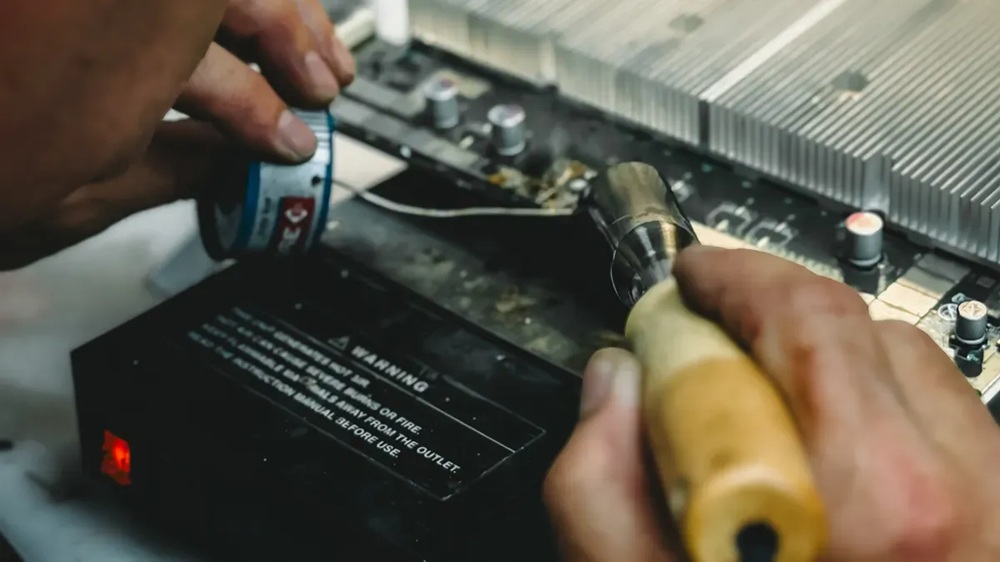
Une ingénierie solide ne signifie pas grand-chose sans la puissance de fabrication nécessaire pour produire à grande échelle. Vous avez besoin d'un partenaire capable d'accélérer la production, de s'approvisionner en composants de qualité et de s'adapter aux exigences spécifiques de votre marque. Ces trois capacités déterminent si votre produit arrive sur le marché à temps et au niveau de qualité attendu par vos clients.
Vous devez évaluer la capacité de production d'un fabricant avant de vous engager dans un partenariat. Un partenaire ayant une capacité limitée aura du mal à atteindre vos objectifs de croissance. Renseignez-vous sur la taille de l'usine, les lignes de production, la production mensuelle et la taille de la main-d'œuvre. Ces chiffres vous indiquent si le fabricant peut gérer votre volume actuel et votre expansion future.
L'évolutivité va au-delà de la capacité brute. Un fabricant haut de gamme construit des systèmes qui maintiennent la qualité à mesure que le volume augmente. Ils investissent dans des équipements de test automatisés, des instructions de travail standardisées et des équipes de production formées. Ces investissements empêchent la dérive de la qualité lorsque la production augmente.
La résilience de la chaîne d'approvisionnement affecte directement vos délais. Les perturbations mondiales peuvent interrompre la production et retarder les expéditions. Le tableau suivant présente les perturbations courantes et la manière dont les fabricants haut de gamme les atténuent :
|
Perturbation de la chaîne d'approvisionnement |
Impact sur les délais |
Stratégie d'atténuation |
|
Problèmes de fiabilité des fournisseurs (pénuries de main-d'œuvre, délocalisations d'usines, erreurs de jugement de la demande) |
Ralentissements de la production et retards dans la fabrication des haut-parleurs |
Vérifier les fournisseurs sur le prix, la précision, la qualité et la rapidité de livraison ; maintenir une communication fréquente via des appels vidéo et des visites d'usine ; utiliser le suivi en temps réel |
|
Augmentations des prix des matières premières (5,4 % en 2025, prévision de 4,4 % en 2026) |
Coûts des composants plus élevés absorbés par les entreprises, ce qui pèse sur les délais d'approvisionnement |
Surveillance continue des prix des matières premières ; planification stratégique des stocks |
|
Droits de douane américains à l'importation (passant de 2,2 % à 10,9 %) |
Augmentation du coût et de la complexité de l'approvisionnement en pièces, prolongeant les délais d'approvisionnement |
Double fabrication ; fournisseurs multiples ; considérations liées à la relocalisation |
|
Pandémie de COVID-19 |
A mis en évidence les failles des modèles de gestion des stocks en flux tendu (lean/just-in-time), provoquant des retards majeurs |
Plans d'urgence renforcés ; maintien de pièces de rechange ; base de fournisseurs diversifiée |
|
Blocage du canal de Suez par l'Ever Given |
A démontré comment un seul événement logistique peut paralyser le commerce mondial et retarder les expéditions |
Plans de secours ; programmes de gestion des risques ; stratégies multi-fournisseurs |
|
Défis logistiques et de distribution (prix du carburant, livraison du dernier kilomètre, erreurs administratives) |
Expéditions lentes et retards de livraison |
Bonne planification ; conformité réglementaire ; partage de données en temps réel |
Vous devriez interroger vos partenaires potentiels sur leurs plans d'urgence. Un fabricant qui dépend d'un seul fournisseur ou d'une seule usine court un risque important. Une seule perturbation peut arrêter complètement votre production.
Alors que l'incertitude mondiale continue d'affecter la fabrication, les OEM réalisent que la délocalisation est une décision de production aux rendements décroissants. Sans une stratégie de chaîne d'approvisionnement solide derrière les programmes de moulage par injection à l'étranger, les risques s'accumulent : longs délais de livraison, retards douaniers et de conformité, qualité incohérente et parfois des erreurs de communication coûteuses. De nombreux OEM sont proactifs dans la relocalisation pour éviter ces pièges, prendre le contrôle de leurs chaînes d'approvisionnement et bénéficier des avantages décrits dans le dernier article.
Les fabricants haut de gamme intègrent la résilience dans leurs opérations. Ils mettent généralement en œuvre plusieurs stratégies pour protéger la production :
Tonewinner exploite plusieurs sites de production et maintient un réseau de fournisseurs diversifié. Cette infrastructure permet à l'entreprise de mettre à l'échelle la production pour des marques audio mondiales tout en se protégeant contre les perturbations de la chaîne d'approvisionnement.
La qualité des composants détermine la fiabilité du produit. Vous avez besoin d'un partenaire qui s'approvisionne en matériaux de qualité supérieure et maintient des normes d'inspection à l'entrée strictes. Un fabricant qui fait des économies sur les composants livrera des produits qui tomberont en panne sur le terrain.
Commencez par poser des questions sur le processus de qualification des fournisseurs du fabricant. Les partenaires haut de gamme évaluent les fournisseurs selon plusieurs critères : prix, précision, qualité et rapidité de livraison. Ils effectuent des visites d'usine et maintiennent une communication régulière. Ils suivent également les performances des fournisseurs au fil du temps.
Les composants clés des produits audio comprennent les haut-parleurs, les membranes, les bobines acoustiques, les aimants, les enceintes, les connecteurs et les composants électroniques. Chaque composant affecte la qualité sonore, la durabilité et l'expérience utilisateur. Vous devez comprendre où votre partenaire se procure ces pièces et comment il vérifie la qualité.
Le choix des matériaux affecte également les performances du produit. Par exemple, le matériau de la membrane affecte la réponse en fréquence et la distorsion. Le matériau de l'enceinte affecte la résonance et les propriétés acoustiques. Un fabricant haut de gamme comprend ces relations et sélectionne des matériaux qui soutiennent votre signature sonore cible.
L'inspection à l'entrée protège contre les composants défectueux. Renseignez-vous sur les protocoles d'inspection du fabricant. Testent-ils chaque lot ? Tiennent-ils des registres de traçabilité ? Peuvent-ils identifier quel fournisseur a fourni un composant spécifique si un problème survient ?
Tonewinner— maintient des programmes rigoureux de qualification des fournisseurs et d'inspection à l'entrée. L'entreprise s'approvisionne en composants de qualité supérieure et vérifie la qualité à chaque étape de la production.
Chaque marque audio a des exigences uniques. Vous avez besoin d'un partenaire capable de s'adapter à vos spécifications plutôt que de vous forcer à choisir dans un catalogue de produits fixe. La capacité de personnalisation distingue les véritables partenaires OEM/ODM des fabricants sous contrat qui ne font qu'assembler des conceptions standard.
La personnalisation couvre plusieurs domaines du développement de produits. Le tableau suivant présente ce que proposent les fabricants haut de gamme :
|
Catégorie de personnalisation |
Offres spécifiques |
|
Conception et ingénierie acoustique |
Sélection des haut-parleurs, modélisation acoustique de l'enceinte, conception du filtre, réglage DSP pour une performance sonore optimale |
|
Fabrication de l'enceinte |
Découpe de précision CNC, structures d'enceinte renforcées, revêtements durables, normes de production strictes |
|
Marquage et personnalisation |
Personnalisation du logo, nommage des modèles, options de couleur, conception de la grille, support d'emballage |
|
Développement de système |
Solutions complètes : line arrays, enceintes de sonorisation, caissons de basses, enceintes colonnes, systèmes actifs |
|
Processus de conception et d'ingénierie |
Conception acoustique, plans d'enceinte, sélection des composants, développement de système |
|
Développement d'échantillons |
Production de prototypes, tests, ajustements basés sur les retours |
Vous devez évaluer la volonté d'un partenaire à personnaliser à tous les niveaux. Certains fabricants ne proposent que des changements cosmétiques comme l'impression de logo. Les partenaires haut de gamme assurent un réglage acoustique complet, une refonte de l'enceinte et le développement du système.
Avec l'ODM, nous assurons un développement complet du produit — ingénierie acoustique, conception du boîtier, développement du filtre, intégration de l'amplificateur et design industriel — transformant les concepts en produits finis prêts pour le marché.
Le processus de personnalisation suit généralement un chemin structuré. Vous partagez votre concept de produit et vos spécifications cibles. Le fabricant développe les conceptions acoustiques et les plans de l'enceinte. Il sélectionne les composants et construit des prototypes. Vous testez les prototypes et fournissez des retours. Le fabricant affine la conception jusqu'à ce qu'elle réponde à vos exigences.
Ce processus itératif nécessite une communication solide et une expertise technique. Un partenaire qui précipite le prototypage ou saute les phases de test livrera des produits qui ne répondront pas à vos attentes. Vous devez confirmer que le fabricant alloue suffisamment de temps et de ressources au développement des échantillons.
Tonewinner propose des services de personnalisation complets pour les marques audio. L'entreprise prend en charge le réglage acoustique, la conception de l'enceinte, le marquage et le développement complet du système. Cette flexibilité permet aux marques de créer des produits différenciés qui se démarquent sur des marchés concurrentiels.
L'innovation favorise la différenciation des produits, tandis que la conformité ouvre les portes des marchés mondiaux. Vous avez besoin d'un partenaire qui investit dans les technologies futures et navigue dans des paysages réglementaires complexes. Ces deux capacités déterminent directement le succès international.
La conformité réglementaire contrôle votre capacité à vendre des produits audio au-delà des frontières. Chaque marché impose des exigences de certification spécifiques que vous devez respecter avant le lancement. Le tableau ci-dessous résume les certifications essentielles pour les principaux marchés :
|
Certification |
S'applique à |
Objectif principal |
Marché cible |
|
FCC |
Produits audio électroniques et sans fil |
Compatibilité électromagnétique et conformité radio |
États-Unis |
|
CE |
Électronique grand public, produits sans fil, enceintes amplifiées |
Conformité UE en matière de sécurité, CEM et équipements radio |
Union européenne |
|
RoHS |
Composants électroniques et produits finis |
Restriction des substances dangereuses |
UE et canaux de vente au détail mondiaux |
|
CCC |
Équipement audio alimenté |
Sécurité et qualité des produits |
Chine |
|
KC |
Électronique audio |
Compatibilité électromagnétique et sécurité |
Corée du Sud |
La certification ISO 9001 signale des processus de qualité documentés, mais elle ne garantit pas à elle seule la répétabilité au niveau du produit. Comme le soulignent les experts du secteur :
La norme ISO 9001 est largement utilisée comme norme de système de gestion de la qualité, mais la certification seule ne prouve pas la répétabilité au niveau du produit. La preuve d'un changement contrôlé, de responsabilités définies et de critères d'acceptation mesurables reste importante.
Vous devez vérifier les certifications actives et demander la documentation de conformité pour chaque marché cible. Tonewinner détient ces accréditations, permettant la distribution mondiale de Solutions audio OEM/ODM personnalisées.
La technologie audio évolue rapidement et votre fabricant doit mener le changement. Les partenaires OEM/ODM haut de gamme investissent dans ces domaines de recherche clés :
L'audio spatial est désormais une attente de base des consommateurs en matière de jeux, de streaming et de home cinéma. Vous avez besoin d'un partenaire qui investit dans ces technologies dès aujourd'hui.
La fourniture de solutions personnalisées nécessite un processus de développement structuré de bout en bout. Les fabricants haut de gamme gèrent six étapes distinctes :
Une approche intégrée réduit les frictions. Les interventions fragmentées créent des inefficacités qui retardent la mise sur le marché. Tonewinner fournit une gestion de projet de bout en bout pour les solutions audio OEM/ODM personnalisées, assurant des transitions fluides du concept à la livraison finale.
Les huit capacités forment un cadre d'évaluation complet : ingénierie et qualité, fabrication et chaîne d'approvisionnement, innovation et conformité. Évaluez chaque candidat par rapport à chaque capacité. Ne vous fiez pas uniquement au prix ou à la qualité des échantillons. Établissez une fiche d'évaluation qui pèse les systèmes de qualité, le respect des délais de livraison, la compétitivité des coûts, le support technique, la conformité, la communication, la cohérence des lots et l'évolutivité. Un partenaire OEM/ODM haut de gamme doté d'une force dans ces huit domaines devient un atout concurrentiel à long terme, et pas seulement un fournisseur. Tonewinner démontre comment la force en ingénierie, en fabrication et en innovation se traduit par des solutions audio OEM/ODM personnalisées fiables pour les marques audio mondiales.
Vous évaluez les candidats par rapport aux huit capacités. Demandez la documentation, les taux de défauts et des études de cas d'intégration. Tonewinner fournit des données de qualité transparentes et un support technique éprouvé.
Vous avez besoin de la FCC et du marquage CE pour les principaux marchés. La directive RoHS garantit la sécurité des matériaux. La norme ISO 9001 confirme les systèmes de qualité. Tonewinner détient ces accréditations pour une distribution mondiale.
Vous posez des questions sur la taille de l'usine, les lignes de production et la production mensuelle. Vérifiez la double fabrication et la diversification des fournisseurs. Tonewinner exploite plusieurs installations pour soutenir les marques en pleine croissance.
Mots clés :
Tel : +86 020 3479 6146
Tel : +86 020 3479 7660
WhatsApp : +86 15812388120
E-mail : simi@tonewinner.com
Adresse : Building 2, No.1, Hongsheng 3 Road Dashi Street, Panyu District Guangzhou, 511430 China
© 2026 Guangzhou Tonewinner Electronics Co., Ltd
Plan du site | XML | Politique de confidentialité |